
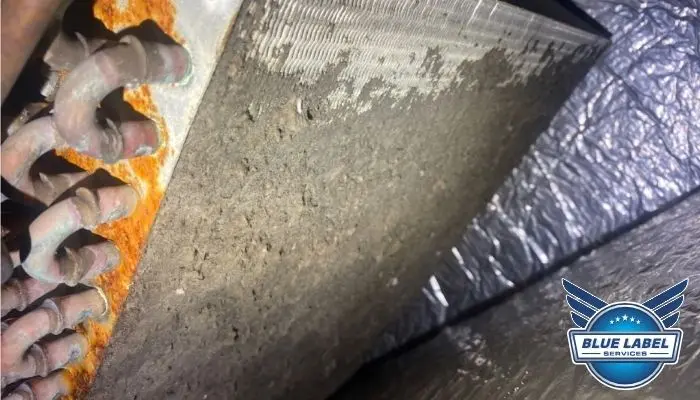
When you think about your Houston home’s air conditioning system, you probably think primarily about staying cool. But your HVAC system also plays an important role in the quality of the air circulating throughout your home.
Houston presents a unique challenge for indoor air quality because of its heat and humidity. Homes are closed up and air conditioned for long periods, while indoor sources such as dust, cooking, cleaning products, pets, and moisture can contribute to indoor pollutants. The EPA recommends addressing indoor air quality through source control, ventilation, filtration, and supplemental air cleaning.
At Blue Label Services, we also look at ways homeowners can use their HVAC system to add another layer of air cleaning.
Why Indoor Air Can Be Different From Outdoor Air
Mother Nature has a pretty impressive air-cleaning system: the sun.
Sunlight contains ultraviolet (UV) radiation, and outdoor environments are naturally exposed to it. Inside your home, however, your walls, roof, windows, and other building materials keep most of those ultraviolet rays from reaching the air circulating through your HVAC system.
That doesn't mean indoor air is automatically unhealthy. But it does mean your home's indoor environment does not have the same natural exposure to sunlight that exists outdoors.
This is one reason some homeowners consider adding UV technology to their HVAC system.
What Does a UV Light Do in an HVAC System?
UV lights installed inside HVAC systems are designed to expose air and HVAC surfaces to ultraviolet radiation as air moves through the equipment.
The effectiveness of UV systems depends on factors such as the type of equipment, UV intensity, exposure time, airflow, installation, and maintenance. UV should be viewed as supplemental air treatment, rather than a replacement for filtration, ventilation, or addressing the source of a problem.
A properly selected and installed UV system can be one component of a broader indoor air quality strategy.
Why Combine a UV Light With an Air Cleaner?
A UV light and air cleaner perform different functions, which is why combining technologies can make sense.
An air cleaner or HVAC filter is designed to capture particles as air passes through it. Depending on the filter and system, this can include airborne dust and other particulate matter. The EPA notes that HVAC filtration can supplement source control and ventilation as part of an indoor air quality strategy.
UV technology provides another form of treatment within the HVAC system.
Rather than relying on one technology to do everything, a combination approach can provide multiple layers of air treatment.
Houston Humidity Makes Indoor Air Quality Even More Important
Humidity is another important part of indoor air quality in Houston.
The EPA recommends keeping indoor relative humidity around 40% to 60% when possible. Excess moisture can contribute to conditions that support mold growth and can affect indoor comfort.
Your air conditioner naturally removes some moisture from the air while it operates. However, problems with your HVAC system, inadequate airflow, or other moisture issues can affect how well your home manages humidity.
If you notice persistent musty odors, visible moisture, or unusually high humidity, the underlying moisture problem should be addressed rather than simply relying on an air cleaner.
Don't Forget Your HVAC Filter
One of the simplest things you can do for your indoor air quality is maintain your HVAC filter.
A dirty or overloaded filter can reduce airflow and prevent the system from filtering properly. The EPA recommends regularly changing or cleaning HVAC filters according to the manufacturer's instructions.
Your HVAC system also needs to be capable of handling the filter you install. A higher-efficiency filter is not automatically better if it restricts airflow beyond what your equipment can accommodate.
Is a UV Light and Air Cleaner Right for Your Houston Home?
There isn't one indoor air quality solution that works for every home. The right approach depends on your HVAC equipment, filtration, humidity levels, household conditions, and specific concerns.
For homeowners looking for an additional layer of air treatment, a UV light and air cleaner combination can be considered as part of a comprehensive HVAC indoor air quality strategy.
Blue Label Services can help you evaluate your existing HVAC system and determine whether adding a UV light, air cleaner, upgraded filtration, or other indoor air quality equipment makes sense for your Houston home.
Improve Your Houston Home's Indoor Air Quality
Your HVAC system does more than keep your home cool. With proper maintenance, filtration, humidity control, and supplemental air-cleaning technology, it can become an important part of your overall indoor air quality strategy.
If you're interested in improving the air inside your Houston home, Blue Label Services can help you explore your options and find an approach that fits your home and HVAC system.
Indoor air quality refers to the condition of the air inside your home and the presence of pollutants, particles, moisture, and other factors that can affect comfort and indoor air conditions. Common indoor pollutants can include dust, pollen, mold, pet dander, and certain chemicals. HVAC filtration, ventilation, humidity control, and supplemental air cleaning can all play a role in improving indoor air quality.
Houston's hot, humid climate can make moisture control particularly important inside your home. Excess indoor humidity can contribute to conditions that allow mold and other biological contaminants to grow. Keeping your HVAC system maintained, controlling humidity, changing filters regularly, and using appropriate air-cleaning solutions can help maintain better indoor air quality.
High humidity can make your home feel uncomfortable and can contribute to moisture-related problems. The EPA recommends keeping indoor relative humidity between 30% and 50% when possible. Your air conditioner naturally removes some moisture while cooling, but homes with persistent humidity problems may benefit from additional dehumidification.
Yes. Your HVAC system can help filter airborne particles as air circulates through the system. The type and efficiency of the filter matter, and filters should be replaced according to the manufacturer's recommendations. Depending on the HVAC system, homeowners may also consider upgraded filtration or supplemental air-cleaning equipment.
A UV light installed within an HVAC system can provide supplemental air treatment as air and surfaces are exposed to ultraviolet light. Its effectiveness depends on the type of equipment, installation, and amount of UV exposure. UV systems should be viewed as a supplement to filtration, ventilation, and moisture control rather than a replacement for those strategies.
An air cleaner and an HVAC filter serve related but different purposes, and the right solution depends on the home and the type of pollutants being addressed. HVAC filters can capture airborne particles as air passes through the system, while additional air-cleaning equipment may provide another level of filtration or treatment. The EPA notes that filtration and air cleaning work best alongside source control and proper ventilation.
A UV light and air cleaner can be used together as part of a broader indoor air quality strategy. Filtration can help capture airborne particles, while UV equipment provides supplemental treatment. Combining technologies may be appropriate for homeowners looking to improve their home's overall air-cleaning approach, but equipment should be properly selected and installed for the specific HVAC system.
Start with the basics: replace your HVAC filter regularly, control indoor humidity, address water leaks or moisture problems, keep your HVAC system maintained, and reduce sources of indoor pollutants. Depending on your home's needs, you may also consider upgraded filtration, an air cleaner, or supplemental HVAC air treatment such as a UV light. A professional HVAC evaluation can help determine which combination makes sense for your home.